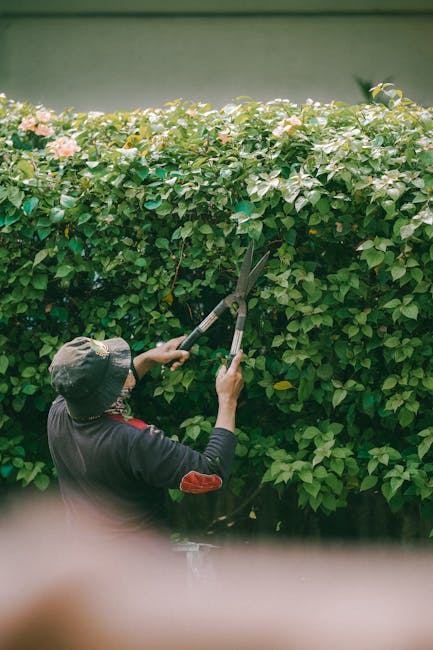
What to ask before hiring gardeners UK proof of credentials and cover
Hiring a gardener should make life easier, not leave you second-guessing who is turning up with tools, ladders, and a strimmer. The safest way to choose well is to know what to ask before hiring gardeners UK proof of credentials and cover so you can check competence, insurance, and overall professionalism before any work begins. That matters whether you need a tidy-up after a wet winter, regular garden maintenance, a one-off garden clearance, or something more involved like landscaping.
To be fair, most gardeners are honest and hardworking. But gardens are not low-risk spaces. Tools are sharp, steps are uneven, trees are heavy, and the weather in the UK can turn a neat job into a slippery one very quickly. So before you agree to anything, ask a few direct questions and get clear answers. This article walks you through the exact questions to ask, what proof to request, and how to spot a gardener who takes both quality and safety seriously.
Table of Contents
- Why this matters
- How the checking process works
- Key benefits and practical advantages
- Who needs this and when it makes sense
- Step-by-step guidance
- Expert tips for better results
- Common mistakes to avoid
- Tools, resources and recommendations
- Law, compliance, standards or best practice
- Options, methods and comparison table
- Case study or real-world example
- Practical checklist
- Conclusion
- Frequently asked questions
Why What to ask before hiring gardeners UK proof of credentials and cover Matters
At first glance, gardening seems simple. A mower, a few shears, maybe a van in the drive. But once you look a little closer, there are real differences between a casual helper and a properly prepared professional. Asking the right questions helps you separate the two without awkwardness.
Proof of credentials and cover is about trust. Credentials tell you whether a gardener has the knowledge and experience to handle the work safely and well. Cover usually means insurance, and sometimes it also includes business protections such as written terms, payment security, and clear complaints handling. If something goes wrong, you want to know who is responsible and how they will put it right.
There is also a practical side. A gardener who can explain their methods, show documents when asked, and describe their process clearly is usually easier to work with. They are less likely to disappear halfway through a job, overpromise, or leave you with a mess. You know the type: the one who says "don't worry, it'll be fine" and then vanishes when the weather turns. Not ideal.
For homeowners, landlords, property managers, and anyone with a larger outdoor space, this matters even more. A missed risk check, poor plant handling, or weak insurance can quickly become expensive. And if your garden includes trees, decking, or heavy clearance work, the stakes are higher again.
Expert summary: the best hire is rarely the cheapest or the flashiest. It is the gardener who can explain their work, show proof of competence, carry appropriate insurance, and communicate like a professional from the first call to the final tidy-up.
How What to ask before hiring gardeners UK proof of credentials and cover Works
The process is straightforward, but it works best when you stay methodical. Instead of asking one vague question like "Are you insured?", ask a short sequence of questions that builds a full picture. Think of it as a quick pre-hire check.
Start with the work itself. What exactly do you need done? Lawn mowing is very different from hedge reduction, tree work, or full tree lopping and removal. A good gardener should be able to tell you whether the job sits within their usual scope or whether they need specialist support.
Next, ask for proof. That proof may include public liability insurance, business registration details, training certificates, trade memberships, or simply a written statement of experience and services. Not every gardener will have the same paperwork, and that is fine. What matters is that they can back up their claims.
Then look at the practical cover around the work. Do they use written quotes? Do they explain what happens if the weather delays the job? Do they describe how waste is removed or recycled? Do they have a policy for handling damage, accidents, or complaints? These details are often more revealing than a polished website.
Finally, check the communication. Are their answers clear and consistent? Do they sound rushed, defensive, or oddly vague? Honest professionals usually answer calmly, sometimes with a bit of detail that shows real experience. That little bit of clarity makes a huge difference.
Key Benefits and Practical Advantages
Asking the right questions before hiring a gardener is not just about avoiding disaster. It also improves the quality of the job from the start.
- Better safety: you reduce the chance of accidents involving tools, ladders, slopes, ponds, or awkward access.
- Clear expectations: everyone knows what is included, what is extra, and what happens if conditions change.
- Less risk of disputes: written answers and proof of cover make it easier to resolve issues fairly.
- Higher quality work: experienced gardeners usually work more neatly and make better decisions on the day.
- More confidence: you can let someone work on your property without that nagging "I hope this goes well" feeling.
There is another benefit that people overlook: better value. A cheaper quote can become expensive if the gardener is not properly insured, lacks the right equipment, or underestimates the job. In real life, the bargain option often costs more in callbacks, damage, or rework. Annoying, but true.
When a gardener can also discuss related services such as lawn mowing, hedge trimming, or ongoing garden maintenance, you gain flexibility. One provider may be able to look after the whole space properly rather than piecemeal.
Who This Is For and When It Makes Sense
This guide is for anyone hiring gardening help in the UK, but some readers will benefit more than others.
- Homeowners who want regular maintenance without taking on the work themselves.
- Landlords and letting agents who need gardens cleared, tidied, or kept presentable between tenancies.
- Busy families who need a reliable hand for recurring jobs.
- Older homeowners who want trustworthy help with tasks that are physically demanding.
- Property managers dealing with larger outdoor areas, shared spaces, or multiple sites.
- People planning bigger projects like landscape gardening, decking, or structural changes around the garden.
It also makes sense if you are booking seasonal work. Spring clean-ups, autumn leaf clearance, and pre-winter tidy jobs can all become rushed, and rushed work is where poor hiring decisions happen. If the garden is overgrown and you are feeling a bit pressed for time, take a breath and ask the questions anyway. Five minutes now can save you a headache later.
Step-by-Step Guidance
Here is a practical way to handle the conversation, from first enquiry to final decision.
- Describe the job clearly. Explain the size of the garden, access, surfaces, waste levels, and any awkward areas. A driveway full of pots and a narrow side gate can change the whole plan.
- Ask what experience they have with similar work. For example, have they handled light maintenance, hedge trimming, or larger clearance jobs before?
- Request proof of insurance. Ask specifically what is covered, such as accidental property damage or public liability. If they hesitate, that tells you something.
- Ask about training or qualifications. Not every gardener needs formal certificates, but relevant experience, safe working practices, and specialist knowledge still matter.
- Check how they handle equipment and safety. Ask whether they bring their own tools, whether equipment is maintained, and how they manage risk on site.
- Get a written quote. It should set out labour, waste removal, materials if any, and any exclusions. This is especially useful for bigger jobs.
- Ask about payment terms. You want to know when payment is due, what method is used, and whether deposits apply. Clear payment terms usually go hand in hand with professionalism. You can also review their payment and security information if available.
- Confirm the complaints process. If something goes wrong, how do they handle it? A calm, sensible answer here is a good sign.
- Check environmental practice. If you care about responsible waste handling or recycling, ask how green waste is managed. Some households prefer this as part of their selection criteria.
- Make your decision on the whole picture. Price matters, but so do trust, communication, and cover. All three.
If the work involves specialist care or broader site improvements, it may help to review a provider's wider service range through a services overview page. That gives you a sense of whether they are a one-person generalist or a team with wider capability.
Questions worth asking word for word
- Can you show proof of public liability insurance?
- What gardening work do you usually take on?
- Have you done this type of job before?
- How do you handle damage or accidental issues?
- Will I receive a written quote?
- Who removes the waste and where does it go?
- What happens if the weather delays the work?
- Do you offer recurring maintenance visits?
- Do you have health and safety procedures?
- What is your complaints process if I am not satisfied?
Expert Tips for Better Results
After enough garden quotes, a few patterns become obvious. The best clients ask plain questions and listen carefully to the answers. The best gardeners answer plainly. Simple as that.
Tip 1: Ask for specifics, not slogans. "Fully insured" sounds nice, but what does it actually cover? "Experienced" is broad. Ask what jobs they have done recently and how they approach similar gardens.
Tip 2: Look for calm, not perfect. A genuinely good gardener does not need to sound like a sales brochure. They might say, "Yes, we can do that, but we'd want to check access first." That honesty is useful.
Tip 3: Match the gardener to the task. A team that is brilliant at mowing and routine tidying may not be the right fit for mature tree work or full site clearance. Different jobs, different skills.
Tip 4: Ask one follow-up question after every answer. This is a tiny trick that reveals a lot. If they say yes to insurance, ask what the policy covers. If they say yes to experience, ask for a recent example. If they say yes to waste removal, ask how it is disposed of.
Tip 5: Keep the quote and promise aligned. If the verbal explanation sounds great but the written quote is thin, pause. Good work should be explainable on paper as well as in conversation.
And one more small thing: trust your instinct, but do not let it work alone. A friendly manner is lovely, but credentials and cover still need checking. Friendliness without paperwork is just friendliness.
Common Mistakes to Avoid
Most bad hiring decisions come from skipping one of a few simple checks. Nothing dramatic. Just small omissions that stack up.
- Hiring on price alone. Cheap is not the same as good value.
- Assuming insurance exists. Always ask for proof.
- Not defining the job. "Sort the garden out" is too vague for a proper quote.
- Skipping written confirmation. Verbal promises are easy to misremember.
- Ignoring access or safety issues. Steps, gates, pets, parked cars, and neighbours all matter.
- Choosing the wrong specialist. Clearance, maintenance, hedge work, and tree-related jobs are not interchangeable.
- Forgetting waste disposal. Green waste can create extra cost and hassle if nobody has planned for it.
One real-world mistake is assuming every gardener works the same way as every other one. They do not. Some are brilliant with regular upkeep and light pruning; others specialise in heavier garden transformations or design-led projects. If the job is more than a quick tidy, ask whether the provider's experience really matches your needs.
Tools, Resources and Recommendations
You do not need any specialist software or complex checklist app. A notepad, a phone, and a sensible eye for detail are enough. Still, a few practical tools help.
- Photo list of the job: send pictures of the whole garden, not just the worst corner.
- Simple job brief: write down the work, timing, access notes, and what you expect to be included.
- Quote comparison sheet: list price, scope, insurance proof, payment terms, and communication quality.
- Before-and-after notes: useful if you want recurring work and need to track whether standards stay consistent.
If you are arranging a larger job, it can help to look at related service information before you book. For example, if the garden needs a full reset, garden clearance may be more appropriate than a simple tidy-up. If the issue is ongoing upkeep, garden maintenance may be the better fit. If the job includes shaping overgrown boundaries, hedge trimming is the obvious starting point.
You may also want to understand how a company handles sustainability, especially if you dislike the idea of waste being dumped carelessly. A clear recycling and sustainability approach is a good sign that the business is thinking beyond the quickest possible job.
Law, Compliance, Standards, or Best Practice
Garden services in the UK can touch on safety, waste handling, property damage, access issues, and sometimes arboricultural work. That does not mean every job is highly regulated, but it does mean you should treat cover and working practice seriously.
At a basic level, a professional gardener should be able to explain how they work safely, how they manage risks, and how they respond if something goes wrong. If they are carrying out more hazardous tasks, such as working at height, using heavy machinery, or dealing with tree-related removals, the need for suitable training, equipment, and insurance becomes even more important.
Best practice usually includes:
- clear written quotes and terms;
- appropriate insurance for the type of work undertaken;
- safe use and maintenance of tools and equipment;
- reasonable care around people, pets, and property;
- transparent waste removal arrangements;
- an accessible complaints process.
If a gardener has a health and safety policy or an insurance and safety page, that can give you extra confidence, provided the details are sensible and not just there for show. And if you care about business values too, a page like about us can help you understand who you are dealing with and how the company presents itself.
One gentle caution: not every small gardening business will have the same formal structure as a larger firm. That is normal. What matters is whether they can still demonstrate competence, responsibility, and the right level of cover for the work they are taking on.
Options, Methods, or Comparison Table
If you are deciding between different types of gardener, this comparison can help. It is not perfect, of course, but it gives a useful sense of what to expect.
| Hiring option | Best for | What to ask | Main risk |
|---|---|---|---|
| Solo gardener | Smaller gardens, routine care, lower-complexity jobs | Insurance, experience, what tasks they normally handle | Limited capacity for larger or urgent work |
| Small garden team | Regular maintenance, medium-sized jobs, quicker turnaround | Who supervises, what cover is in place, how waste is managed | Quality can vary if processes are weak |
| Landscaping company | Redesigns, structural changes, heavier outdoor projects | Scope, previous similar work, written specification, safety handling | May be overkill for simple maintenance |
| Specialist tree or clearance provider | Large removals, heavy overgrowth, difficult access | Specialist credentials, equipment, insurance, waste disposal | Higher cost if the job is not actually specialist |
For many households, the right answer is not the biggest company or the smallest one. It is the one whose experience matches the job exactly. A tidy suburban lawn and a neglected, waist-high back garden are very different beasts, really.
Case Study or Real-World Example
Imagine a homeowner in a typical London terrace with a narrow rear access, a patchy lawn, and a hedge that has grown a bit wild after a busy summer. They need regular work, but also a one-off tidy before family visits at the weekend.
They contact two gardeners. The first gives a quick price over the phone and says, "Yeah, we'll sort it." No written quote, no mention of insurance, and no detail about waste. The second asks for photos, explains what can be done in one visit, confirms what is covered, and sends a clear written quote. They also mention that if the hedge proves taller than expected, they will discuss it before changing the price.
Which one feels easier to trust? Most people choose the second, and for good reason. The work may end up costing a touch more, but the process is calmer, clearer, and less likely to become messy. By the time the job is finished, the garden smells fresh, the cuttings are gone, and you are not left wondering who is responsible for what.
This is exactly why proof and cover matter. They do not just protect you after a problem. They usually indicate a better experience before the problem even has a chance to happen.
Practical Checklist
Use this checklist before you confirm any gardener:
- Have I clearly described the job and shared photos if needed?
- Have I asked what services they actually offer?
- Have I requested proof of insurance?
- Have I asked about experience with similar jobs?
- Have I checked how they handle tools, access, and site safety?
- Have I received a written quote?
- Do I understand what is included and what costs extra?
- Do I know how waste will be removed or recycled?
- Have I asked about payment terms and timing?
- Have I checked how complaints or issues are handled?
- Do I feel confident in their communication?
- Does the overall picture feel professional, not just cheap?
Quick takeaway: if a gardener can answer these questions calmly and clearly, you are usually in good hands. If they cannot, keep looking. No drama needed.
Conclusion
Knowing what to ask before hiring gardeners UK proof of credentials and cover gives you a far better chance of choosing someone reliable, capable, and safe to work on your property. The best hires are rarely based on one feature alone. They come from a combination of clear communication, relevant experience, sensible insurance, and a written quote that matches what was discussed.
Ask the direct questions. Request the proof. Read the answer, not just the price. That simple habit can save money, reduce stress, and help you get a garden you actually enjoy spending time in.
If you are comparing options or planning a bigger project, it may help to look through the full services overview and review practical pages such as pricing and quotes before making your decision.
Get a free quote today and see how much you can save.
And once the work is done, you can sit outside with a cup of tea, hear the quiet again, and enjoy the simple relief of having picked well. Truth be told, that feeling is worth a lot.
Frequently Asked Questions
What should I ask a gardener before hiring them in the UK?
Start with the basics: what services they offer, whether they have relevant experience, what insurance they carry, how they price the job, and what happens if something goes wrong. Keep it specific rather than vague.
Why does proof of insurance matter when hiring a gardener?
Insurance helps protect you if there is accidental damage or an incident on site. If a ladder slips, a tool damages a fence, or someone is injured, you want to know the gardener has suitable cover.
Do all gardeners need qualifications?
Not always in the formal sense, but they should still be able to show experience, safe working practices, and knowledge of the tasks they are taking on. For more specialist work, extra training becomes more important.
How do I know if a gardener is trustworthy?
Look for clear answers, a written quote, proof of insurance, and a calm attitude when you ask questions. Trustworthy gardeners usually explain things plainly and do not get annoyed by sensible checks.
Should I ask for a written quote?
Yes, definitely. A written quote helps prevent confusion about scope, labour, waste removal, materials, and timing. It is one of the simplest ways to avoid arguments later.
What if the gardener says they are too busy to provide documents?
That is usually a warning sign. A professional should be able to share the basics, even if it takes a little time. If they cannot, it may be safer to move on.
Is public liability insurance enough?
It depends on the work. Public liability is a good starting point, but the right cover should match the type of gardening being done. For larger, riskier, or specialist jobs, ask exactly what the policy includes.
How can I compare two gardeners fairly?
Compare more than price. Look at experience, written scope, insurance, communication, payment terms, waste handling, and how each gardener answers your questions. The cheapest quote is not always the best value.
What questions should I ask about garden waste removal?
Ask who removes the waste, whether it is included in the quote, and how it is handled. If you care about sustainability, ask about recycling or green waste disposal too.
What if I only need a small one-off job?
Even then, ask the same core questions. Small jobs can still involve ladders, sharp tools, or access issues, so cover and clarity still matter. The job may be small, but the risk is not always tiny.
Should I ask about complaints procedures?
Yes. A gardener who has a sensible way to handle concerns is usually more professional than one who avoids the topic. It is reassuring to know how issues will be resolved if you are unhappy with the result.
When is it better to hire a landscaping company instead of a general gardener?
If the job involves redesigning the space, structural changes, heavy ground work, or more complex outdoor improvements, a landscaping provider may be better suited. For routine upkeep, a gardener is usually the right choice.